

1. The research required for Searching For The Remarkable In Things must have been quite extensive, given the vast historical records relating to the devastating era of slavery detailed in your novel?
Some of the research necessary for the book had formed the background of both my PhD and, before that, my Master’s, which, in part, looked at folk stories and how they affected a sense of identity and community on the plantations. This required an understanding of the harsh realities of life for enslaved people on the plantations both in the Caribbean and the USA, and I read numerous books, accounts and diaries from people who had experience of that. I also read stories about escapes from the plantations, some of which were ingenious, but also involved massive risks and required immense courage, not only on the part of the person escaping but the network of people that helped them. But I also wanted to show other types of courage, like the small acts of resistance that many enslaved people showed – not just through the stories which were a way of keeping a sense of self despite the terrible conditions – but in a determination to do things on their own terms, where they could, and, for some, in the efforts to abolish slavery. Some formerly enslaved people, like Frederick Douglass, eloquently shared their stories, forcing people to confront the horrors of slavery. So, yes, although I had some knowledge, I had to do a lot of further research and, even though I had an outline of a story, had to work out a timeline that made sense and reflected what was going on in the Caribbean and the UK in order to make it a plausible storyline.
2. Codes sewn into quilts and lyrics in songs helped relay messages to those trapped on the plantations which also helped guide people to freedom too. Can you tell us more about these intricate communication systems in place during those inconceivable times?
The impetus for this story was, at least in part, seeing a patchwork quilt in a small museum in South Carolina, its squares representing coded messages for runaways. This idea intrigued me but I also thought the patchwork quilt was an interesting metaphor for this story showing how connected people are and how different parts can help to form a whole. The stories – Brer Rabbit and Anancy stories in the Caribbean – also had hidden messages which helped people to show resistance. Through the cunning central characters they both demonstrated ways that brains can overcome brawn and the stories offered covert forms of resistance, showing how to outwit the plantation owners, while helping to preserve some of the culture and tradition of their African heritage which they’d tried to wipe out. There was an immense amount of creativity on the plantations, some of which has laid foundations for stories and music now.
3. You were helped by many people to ensure your portrayal of the enslaved characters, such as Mary, were as realistic as possible. Can you share the process of working alongside the team at Writing Diversely and also the support from your editors and other industry professionals too?
I wrote Mary first, actually. I felt very connected to her and the fact that, on one level, she was a teenage girl struggling with the loss of her family, and especially the brother who she both loved and felt responsible for. I wanted her voice to be lyrical and strong, but I was also aware of how much outside my own experience her life was and so I approached a sensitivity reader, a very lovely, knowledgeable African American woman called Kashinda Carter, who was very helpful both in terms of the history and the characterisation. It really helped that she was both generous and loved the story. Later, I approached her a second time to ask her to look specifically at dialect. She was keen to emphasise the array of possible ways that Mary and Martha and Tildy could have spoken at that time in that place, as well as the range of possible experience on the plantations, but she also felt that their voices had an authenticity. Obviously my publisher was also very involved, making numerous suggestions about Mary – and also the other characters – to ensure that they were engaging and consistent but, despite the very helpful advice, and recommended alterations, I was very grateful to my publisher Elaine Bousfield that she never tried to change my style and was always emphatic that these were my words.
4. Your story covers two very different timelines that are inexplicably linked as the story unfolds. Can you describe your writing plan for this? Was it difficult to weave Mary, Reuben, Martha, and all, from the late 1800s towards Clover, her dad, Caterina and those from the present day, as the storyline unravelled?
I didn’t really have a plan as such! The story evolved and changed over a very long period of time, trying to work out the best way of telling this story. At one point, Caterina told parts of the story from her own perspective and I loved aspects of her story and voice, but, ultimately, it felt too ‘crowded’ so we limited it as far as possible to Clover and Mary. I did want Ruby to tell part of the story from her own perspective, though. I wanted her to have her own arc which I thought paralleled Clover’s growing awareness in many ways.
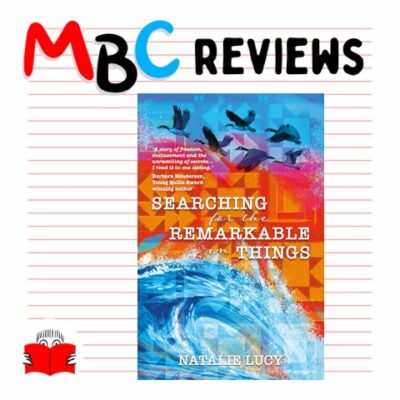
5. The cover for this novel is striking. Can you share the working process with your wonderful illustrator, Isla Bousfield-Donohoe, to reach the final cover?
I love the cover. Isla very much came out with the idea. Even at the first meeting she had a very strong vision and, the final cover, was pretty much what she introduced at the first meeting. Isla really connected with the story, which helped, and also wanted to draw on the fact that art and painting runs through the story which you can see in her illustration. I suggested subtle changes but she introduced so many elements and themes – if I can call them that – from the story, the patchwork quilt and sea and importance of freedom signified in part by the birds.
6. There’s a great sense of hope and strength in the stories told within the novel, family memories passed down from generation to generation through the art of storytelling in some scenes. What would you like your readers to take away from the underlying message of resilience and courage in Searching For The Remarkable In Things?
I’m glad the sense of hope comes through. There are lots of sad aspects in the narrative but I really wanted it to be a positive story about, among other things, finding your own power. I hope readers will take away the idea that you can change things in your life. And that, even in really difficult circumstances, it might be possible to have a second chance. I hope there is a sense of forgiveness in the story too.
I also wanted to show that Britain has been multicultural for centuries, and beyond that, and that some of its wonderful complexity and vibrancy comes from the mix of people and ideas.
7. Grief, and friendship where it’s least expected, are strong themes in this thought-provoking story. Were the relationships planned from first draft or did they come together as you wrote the novel and their lives played out on the page?
Early on, I had sketched out a story, but it changed and evolved over a long time. At the beginning, though, there was always a girl whose mother died and who had to somehow come to terms with her grief and learn about her past in order to discover a sense of self. In many ways I think this is mirrored by Britain’s wider history and the need to confront its troubling colonial past. The other characters always existed too — Caterina; Mary, of course, and Ruby, but they changed and developed over time. I think Ruby ultimately became a more significant character and, for me, she’s important and quite empathetic, even if she is not always as likeable or sensitive as she might be.
8. What’s next for Natalie Lucy?
I have already written a dual narrative story about three teenage friends, struggling to rebuild their lives in postwar London, that I really hope will be published. I am also working on a dystopian novel in the wake of climate change that is, in part, about celebrating difference in people.
Read the review by Sarah Broadley on My Book Corner here.

Leave a Reply